What to expect at your first vet visit, step by step
By Maya Krishnan · Updated 2026-06-21
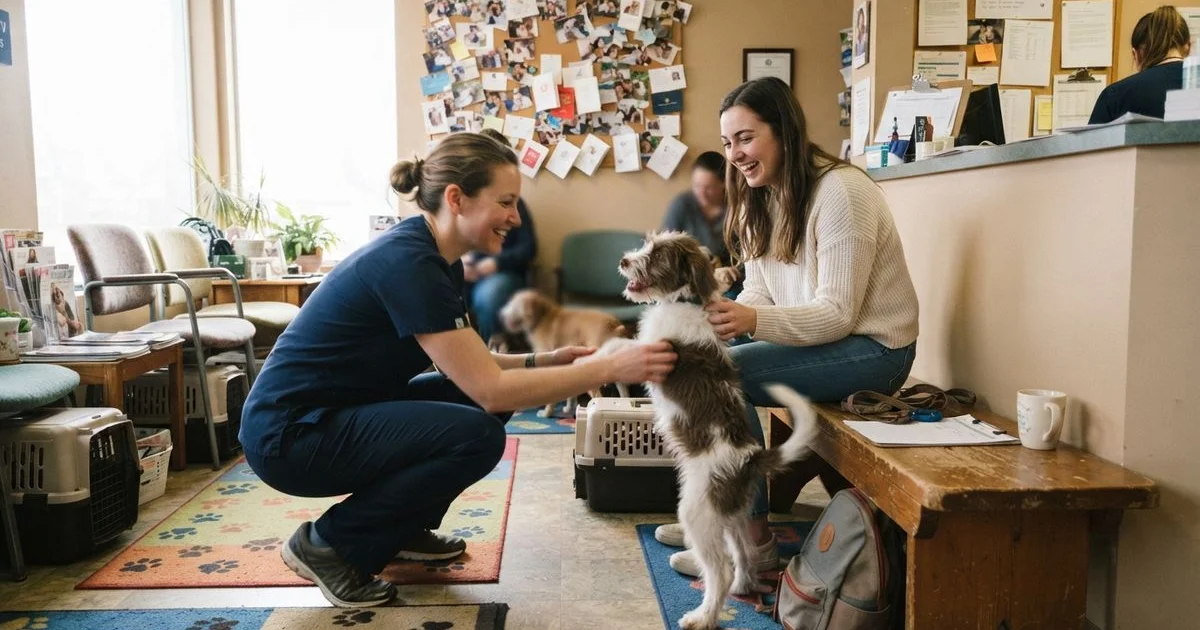
A first vet visit is easier to sit through when you know roughly what’s coming. Here’s the typical shape of a routine wellness appointment in Denver, start to finish.
Check-in and the weigh-in
You’ll usually check in at the front desk, confirm your pet’s information, and get weighed almost immediately, often right in the lobby or a side hallway. Weight matters more than people expect: it’s used to calculate medication dosing and flags gradual changes that are easy to miss day to day at home.
History questions before the hands-on exam
Before the vet touches your pet, expect a round of questions: diet, activity level, any behavior changes, litter box or bathroom habits, and anything you’ve noticed that seems off even if it feels minor. This isn’t small talk. A good history often points a vet toward something the physical exam alone would miss, especially with subtle issues.
The physical exam itself
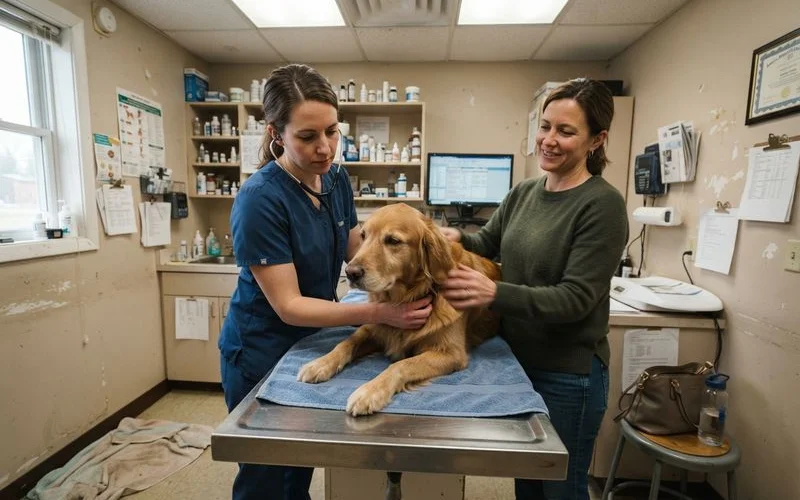
The vet works through a fairly standard sequence: eyes, ears, teeth and gums, heart and lungs with a stethoscope, abdomen, joints, and skin and coat. Expect some handling your pet might not love, ear checks and mouth exams especially, but a good vet works efficiently and calmly rather than wrestling a nervous pet into position.
| Exam step | What the vet is checking for |
|---|---|
| Weight | Dosing accuracy and gradual weight change over time |
| Eyes and ears | Infection, discharge, or early signs of chronic conditions |
| Teeth and gums | Dental disease stage and gum color, which reflects circulation |
| Heart and lungs | Rhythm, murmurs, and breathing sounds |
| Abdomen | Organ size, discomfort, or masses |
| Joints and gait | Mobility issues, especially in older pets |
Vaccines, if they’re due
If vaccines are due, they’re usually given at the end of the physical exam. The vet or technician will typically walk you through what’s being given and why, and this is a natural moment to ask which vaccines your pet actually needs based on lifestyle rather than accepting a default list.
The wrap-up conversation
Before you leave, expect a summary: what was normal, anything to watch, and next steps if something needs follow-up. This is your window to ask questions you’ve been holding back, about diet, behavior, or anything you weren’t sure was worth mentioning. A good vet treats this conversation as part of the visit, not an afterthought squeezed in at checkout.
Paperwork worth bringing along
If you have any history at all, prior vaccine records, a shelter’s medical summary, or notes from a breeder, bring it to the first visit even if it feels incomplete. A partial history is more useful than none, and it can save your new vet from repeating tests or vaccines your pet may have already had. If you’re adopting and have no paperwork at all, just say so plainly. A good vet builds a plan around that gap rather than treating it as a problem.
What’s different for a puppy, kitten, or new adult pet
A puppy or kitten’s first visit includes extra pieces beyond a standard adult wellness check: a parasite screening, the start of a vaccine series rather than a single booster, and often a conversation about spay or neuter timing. If you’ve adopted an adult pet with an unclear history, expect the vet to spend more time on history-taking and possibly recommend baseline bloodwork, since there’s no prior record to lean on and it’s worth establishing one early. For a full breakdown of what that first year costs, see our guide to new puppy and kitten vet costs.
Making it easier on a nervous pet
If your pet gets anxious at the vet, mention it when you book. Many Denver practices can schedule a quieter time slot or use calming techniques for anxious pets, and a heads-up before you arrive gives staff a chance to prepare rather than adapting on the fly.
To find a general veterinary practice that fits your pet’s needs, browse the directory and check our methodology for how we score communication and thoroughness. The full Denver directory covers every specialty if your pet needs more than routine wellness care.
FAQ
- How long does a typical wellness visit take?
- Usually somewhere between twenty and forty-five minutes, depending on how much history-taking is needed and whether vaccines or bloodwork are added on.
- Should I bring my pet's old records to a new vet?
- Yes, if you have them. Prior vaccine history, medications, and any known conditions save time and help the new vet avoid unnecessary repeat testing.
- Do I need to fast my pet before a wellness visit?
- Not for a standard wellness exam. Fasting is usually only needed if bloodwork specifically requiring it is planned, so ask ahead if you're unsure.
- Is it normal for the vet to ask a lot of questions before touching my pet?
- Yes. A thorough history, diet, behavior, any changes you've noticed, gives the vet context that makes the physical exam more useful, not less efficient.
Related on this site
- Browse general veterinary care providers
- What a vet visit really costs in Denver, and what drives the total
- Caring for a senior pet: what changes and how often to see the vet
- Your new puppy or kitten's first year of vet care, mapped out
- Choosing a vet in Denver: what to look for and questions worth asking
- All guides →