Free and low-cost vet care in Denver: where to start
By Maya Krishnan · Updated 2026-06-08
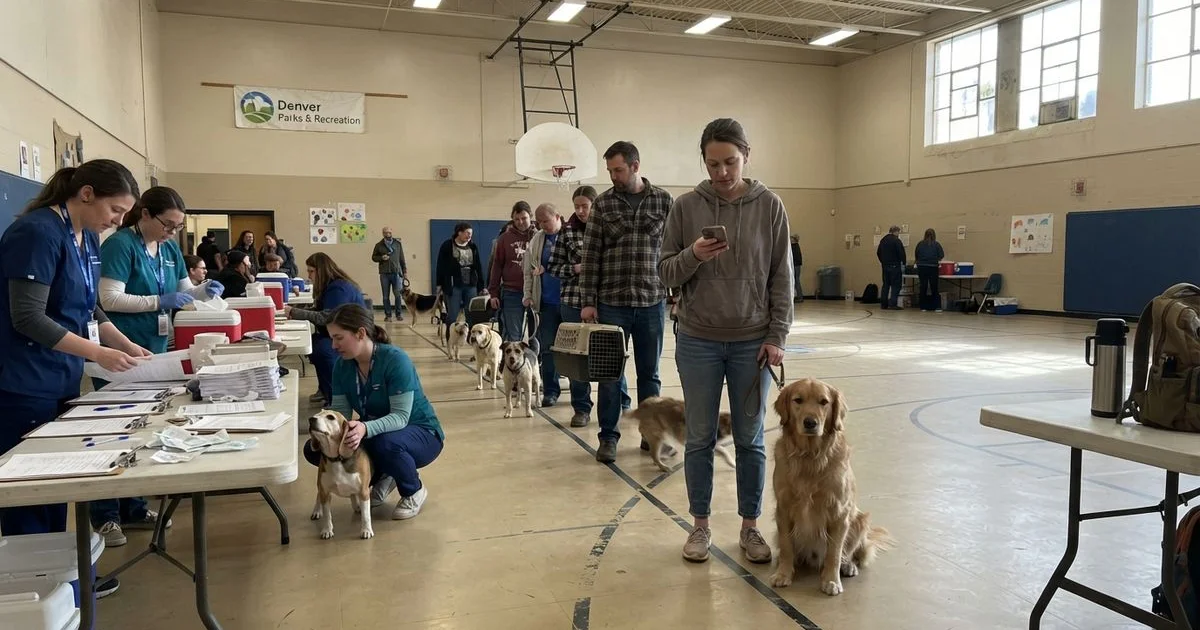
Full-service vet care in Denver isn’t cheap, and for a lot of households the real question isn’t which vet is best, it’s which one is affordable this month. The good news: low-cost care in this city isn’t a fallback option, it’s a real category with its own strengths.
What “low-cost” actually covers
Low-cost veterinary care in Denver generally falls into a few buckets:
- Dedicated vaccine and wellness clinics that focus on core shots, basic exams, and preventive care at a lower price than a full-service hospital.
- Spay/neuter programs, sometimes nonprofit-affiliated, that offer sterilization surgery at reduced cost, occasionally income-based.
- Sliding-scale or assistance programs run by some practices for hardship cases, usually limited in availability.
None of these replace a full-service vet for sick visits, surgery, or ongoing management of a chronic condition. They’re built for routine, predictable care, which is exactly where most of a pet’s lifetime vet spend actually goes.
The price gap, in real numbers
Based on typical per-shot pricing in the Denver area, a dog needing three core vaccines runs roughly forty to fifty-five dollars at a low-cost clinic, compared to something closer to seventy to ninety dollars at a full-service practice for the same three shots. That gap holds up across most routine services: the exam itself costs less because the visit is shorter and more standardized, and the overhead per patient is lower.
| Service type | Low-cost clinic | Full-service vet |
|---|---|---|
| Core vaccine series (3 shots, dog) | Roughly $41-$55 | Roughly $68-$91 |
| Wellness exam only | Lower, often bundled with vaccines | Standalone fee, generally $50-$90 |
| Spay/neuter | Often reduced, sometimes income-based | Full surgical pricing |
| Sick visit or diagnostics | Typically not offered | Standard service |
Before you compare prices, it helps to know which vaccines your pet actually needs, since not every core or elective shot applies to every animal. Our guide on which vaccines your pet needs in Denver breaks down what’s core versus optional.
What to expect when you go
Low-cost clinics tend to run on tighter schedules with less flexibility than a full-service practice. Expect a narrower service menu, less time for extended conversation about your pet’s overall health, and in many cases a cash-only or limited-payment setup. That trade-off is fine for a healthy pet coming in for a routine shot. It’s a worse fit if your pet has an ongoing condition that benefits from one vet knowing the full history.
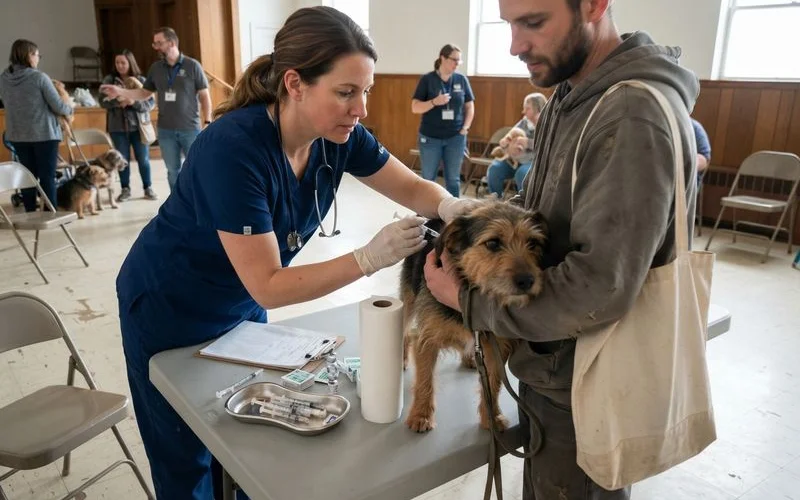
Bring any prior vaccine records with you, and ask for a written certificate or printout before you leave. Some low-cost clinics don’t automatically send records to your regular vet, so that paper trail is on you to keep.
Spay and neuter assistance specifically
Cost is the single biggest reason pet owners delay spay or neuter surgery, and Denver has options built around exactly that friction point. Reduced-cost and income-based programs exist alongside full-price surgical scheduling at general practices. If cost is the barrier, ask directly whether a clinic offers a reduced rate or knows of a current assistance program, since availability shifts over time and isn’t always advertised prominently.
What to skip trying to save money on
Not every corner is safe to cut. Diagnostics for a sick pet, treatment of an active infection, and management of a chronic condition all need the continuity and equipment of a full-service practice, not a routine vaccine clinic. Using a low-cost clinic for what it’s built for, prevention and routine wellness, while reserving a full-service vet for anything more complex, keeps your pet’s care solid without paying full-service prices for things that don’t need it.
It’s also worth asking any low-cost clinic directly what they don’t handle, rather than assuming. Some run basic bloodwork on-site, others don’t offer any diagnostics at all and will refer you elsewhere the moment something beyond routine care comes up. Knowing that ahead of time saves you a wasted trip during an actual health concern.
Building a mixed approach
Plenty of Denver pet owners use a hybrid setup: a low-cost clinic for vaccines and routine wellness, paired with a full-service vet kept in reserve for anything unexpected. That combination keeps routine costs down without giving up a relationship with a vet who knows your pet if something goes wrong. Start with the low-cost and vaccine clinics in your area and compare what each one actually covers before you commit to a single provider.
For details on how we score and rank these listings, see our methodology, or browse the full Denver directory to see every category side by side.
FAQ
- Are low-cost vet clinics lower quality than full-service practices?
- Not necessarily. Many run on a volume model with a narrower menu of services, often cash-focused with fewer add-ons, rather than cutting corners on the care itself.
- Can I get emergency care at a low-cost clinic?
- Usually not. Most low-cost and vaccine clinics focus on routine, scheduled care and refer urgent or complex cases to a full-service or emergency practice.
- Do low-cost clinics take walk-ins?
- It varies by clinic and by service. Vaccine clinics are more likely to take walk-ins; spay/neuter and dental work usually require a scheduled appointment.
- Will my regular vet still have my pet's records if I use a low-cost clinic for one visit?
- Not automatically. Ask the low-cost clinic for a copy of any records or vaccine certificates and keep them yourself, since the two practices may not share systems.