Choosing a vet in Denver: what to look for and questions worth asking
By Maya Krishnan · Updated 2026-06-11

Picking a vet is a decision you’ll likely live with for years, through wellness visits, the occasional scare, and eventually the hardest appointment of all. It’s worth more thought than picking whoever has the closest parking lot.
Start with what actually predicts a good fit
Across reviews of Denver-area practices, the same handful of qualities show up again and again as the difference between “fine” and “genuinely trusted.” Staff who are patient and gentle with anxious pets. Vets who explain what they’re doing and why, in plain language, rather than rushing through. Clear pricing before treatment starts, not a surprise at checkout. These aren’t luxuries, they’re the basics that separate a practice worth staying with from one you tolerate.
Green flags versus red flags
| Green flag | Red flag |
|---|---|
| Staff explain findings and options in plain language | Vague answers or pressure to decide immediately |
| Written estimate offered before treatment | Charges appear on the bill you didn’t discuss first |
| Reasonable wait times, or a heads-up if running behind | Consistently long waits with no communication |
| Follow-up call or message after test results come back | Test results that require you to chase the clinic down |
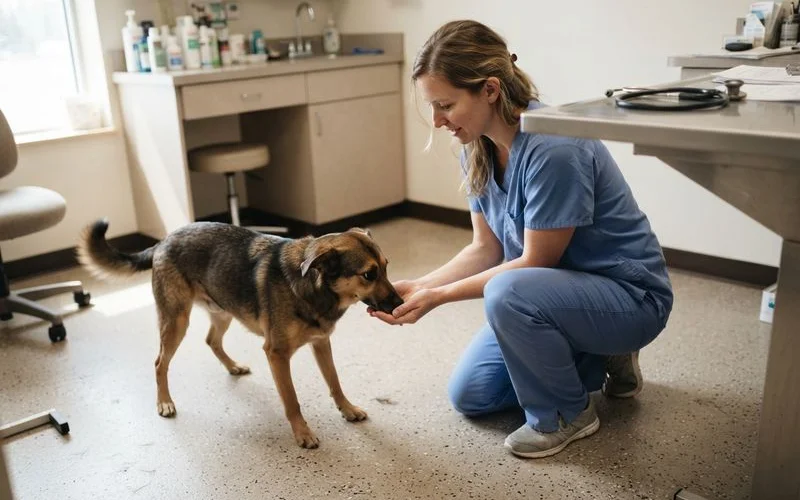
| Calm, patient handling of a nervous or scared pet | Restraint methods that seem to escalate a pet’s fear |
If you notice more than one or two red flags on a first visit, it’s worth trying another practice before you’re locked in for an emergency.
Questions worth asking before you commit
A few direct questions, asked at your first appointment or even a quick phone call, tell you a lot:
- How do you handle a pet that’s anxious or fearful during exams?
- What’s your typical wait time for a scheduled appointment?
- If bloodwork or tests are recommended, do you provide a cost estimate first?
- How do you communicate test results, and how long does that usually take?
- Is there a vet on staff who’s board-certified or has specific experience with my pet’s breed or species?
None of these questions is confrontational. A practice confident in how it operates will answer plainly, and how they answer often tells you as much as the answer itself.
Credentials that are worth a quick look
Not every credential matters equally, but a few are worth noting when you’re comparing practices. A DVM behind a vet’s name confirms the base veterinary degree. Board certification signals extra training in a specialty like surgery or internal medicine, relevant if your pet has a complex condition. AAHA accreditation and Fear Free certification both reflect a practice that has opted into external standards beyond the state license minimum. None of these alone guarantees a good experience, but they’re reasonable tiebreakers between two similar-looking options.
Location and hours matter more than people expect
A slightly better-reviewed vet across town is sometimes the wrong choice if it means you’ll hesitate to go in during an actual problem because of the drive. Weigh proximity and hours seriously, especially if you don’t drive or rely on someone else for transport. A good vet you can actually get to consistently beats a great one you visit reluctantly.
If you have multiple pets with different needs, a large dog and an exotic bird, for instance, you may end up splitting care across two practices rather than expecting one clinic to do everything well. That’s a completely normal setup, and better than forcing a single vet outside their comfort zone with a species they rarely see.
Give it two visits before deciding
One appointment rarely tells the whole story, good or bad. A rushed visit during a particularly busy week isn’t necessarily representative, and neither is one unusually smooth visit. Give a new practice a wellness check and one other interaction, a phone call about a question or a minor concern, before deciding it’s your long-term vet. If you’re not sure what that first appointment actually involves, our step-by-step guide to a first vet visit walks through it.
Once you’ve narrowed your options, compare full profiles across the Denver veterinarian directory and see how we weigh reviews, responsiveness, and completeness in our scoring methodology.
FAQ
- Does a fancier-looking clinic mean better care?
- Not reliably. A clean, well-run space matters for comfort and hygiene, but the quality of the exam, the vet's communication, and how the team handles your pet matter more than decor.
- Should I ask about credentials like AAHA accreditation before booking?
- It's a reasonable question. Accreditation and certifications aren't required to practice, but they signal a clinic has volunteered for extra oversight, which is worth something even if it's not the whole picture.
- How do I know if a vet is good with anxious pets?
- Ask directly. Many Denver practices now train staff in low-stress or fear-free handling techniques, and a front desk that can describe what they actually do, rather than just saying yes, is a good sign.
- Is it a red flag if a vet always recommends the most expensive option?
- It's worth watching for. A vet who explains multiple options with real trade-offs, including a lower-cost path when medically reasonable, is generally more trustworthy than one who only ever presents the priciest choice.