Your new puppy or kitten's first year of vet care, mapped out
By Maya Krishnan · Updated 2026-06-24
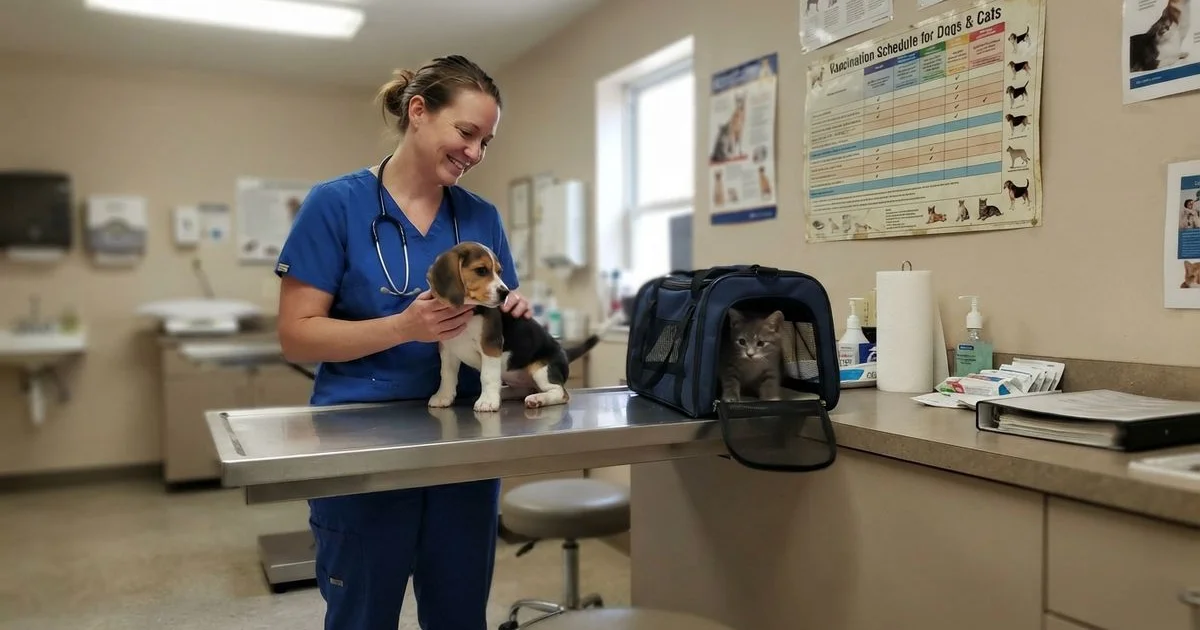
The first year with a new puppy or kitten involves more vet visits than most new owners expect, and each one adds up. Knowing the shape of that first year ahead of time makes it easier to budget instead of getting surprised visit by visit.
The vaccine series: the biggest early time commitment
Puppies and kittens need a series of vaccines, typically spaced three to four weeks apart, rather than a single dose. This isn’t padding, it’s how the immune system actually builds lasting protection at that age. A full puppy or kitten vaccine series at a full-service vet, covering multiple visits, commonly totals somewhere in the range of $174 to $232 depending on how many vaccines are included and your pet’s species. A low-cost or vaccine-specific clinic can bring that total down meaningfully for the same series.
What a first year typically includes
| Milestone | Typical timing | What’s involved |
|---|---|---|
| First wellness visit | Around 8 weeks | Initial exam, start of vaccine series, parasite screening |
| Vaccine series visits | Every 3-4 weeks until roughly 16 weeks | Continued core vaccines, weight and development check |
| Spay or neuter | Varies by size and breed, often within the first year | One-time surgical cost, timing set by your vet |
| Microchipping | Often bundled with spay/neuter | One-time procedure, sometimes discounted when combined |
| Rabies vaccine | Typically included in the later series visits | Legally required in Colorado |
Budgeting realistically
Adding it up, a full first year of vet care for a new puppy or kitten, including the wellness visits, full vaccine series, and spay or neuter, commonly lands in the several-hundred-dollar range before any unexpected illness or injury. That’s a meaningful cost, but it’s spread across multiple visits rather than one lump payment, which makes it easier to plan around than it might sound at first.
Where owners commonly cut corners, and where not to
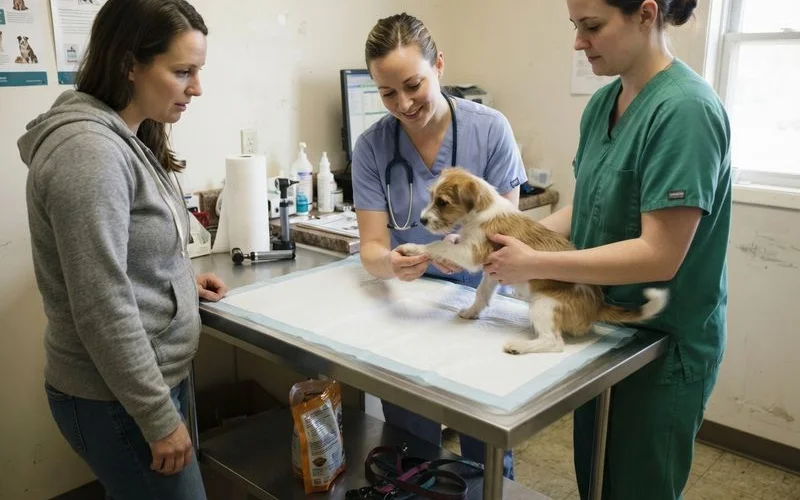
Skipping or delaying a vaccine series visit is the most common shortcut new owners take when money is tight, and it’s the one that carries the most risk, since a partial series can leave real protection gaps. If cost is the concern, a low-cost or vaccine clinic is a better answer than skipping doses altogether. Spay or neuter timing has more flexibility and is worth discussing directly with your vet based on your pet’s size and breed rather than following a generic rule.
Unplanned costs still happen
Even a well-budgeted first year can include a surprise: a swallowed object, an injury from rough play, or an unexpected illness. Building a small buffer into your first-year budget, beyond the predictable milestones above, means an unplanned visit doesn’t derail your finances the way it would if you’d budgeted down to the dollar for only the expected items.
Parasite prevention: the ongoing cost people forget to plan for
Beyond the one-time and series-based costs above, monthly flea, tick, and heartworm prevention is an ongoing expense that starts in the first year and continues for your pet’s life. It’s easy to budget for the dramatic first-year milestones and forget this steady monthly cost, but skipping it to save money short-term is one of the more expensive shortcuts an owner can take, since treating an actual heartworm infection or a flea infestation in the home costs far more than years of prevention.
A quick pre-adoption gut check
If you’re still deciding whether to adopt, it’s fair to ask a shelter or breeder what’s already been done, vaccines, deworming, microchipping, before you take the pet home. Knowing what’s already covered versus what’s still ahead helps you budget the remaining first-year costs more accurately from day one.
Setting up for the years after
The first year sets the tone for your pet’s medical record and your relationship with a vet. Sticking with one general veterinary practice through this whole stretch, rather than bouncing between clinics, means your vet has full context by the time your pet reaches its first adult wellness exam.
For how we score practices on thoroughness with young, developing patients, see our methodology. The full Denver directory covers every category, including low-cost options, if budget is the deciding factor.
FAQ
- Why does my puppy need so many vet visits in the first few months?
- Puppies and kittens need a series of vaccines spaced weeks apart, since a single early dose doesn't reliably build full immunity. Each visit in the series matters, not just the first one.
- Can I skip a visit in the vaccine series to save money?
- It's not recommended. Skipping a dose in the series can leave a gap in protection right when your pet's immune system is still developing, which is the highest-risk window.
- When should I schedule spay or neuter surgery?
- Timing varies by size, breed, and your vet's specific recommendation, generally somewhere in the first year. Ask your vet what timeline fits your specific pet rather than assuming a single standard age.
- Is microchipping worth doing at the same visit as spay or neuter?
- Many owners do it that way since the pet is already sedated, which can make the chip placement more comfortable. Ask your vet if combining them is an option.