Caring for a senior pet: what changes and how often to see the vet
By Maya Krishnan · Updated 2026-06-23
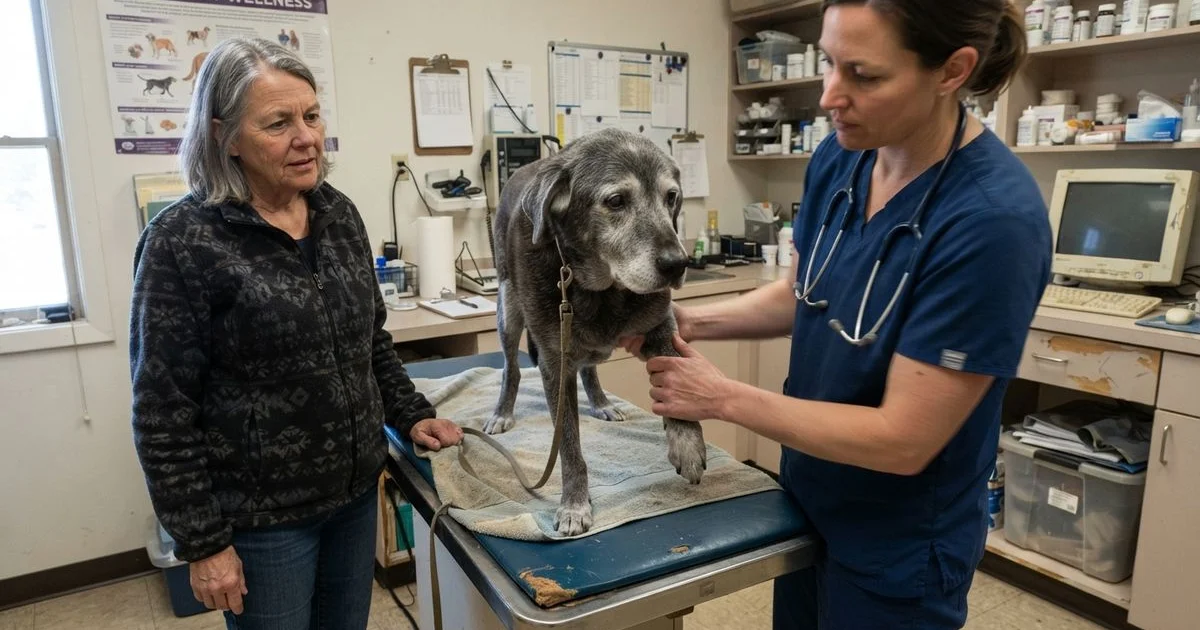
Aging in pets tends to sneak up rather than announce itself. A dog that was bounding around the yard last year is suddenly a little stiffer this year, and it’s easy to write it off as just getting older. Sometimes that’s exactly what it is. Sometimes it’s the first sign of something worth catching early.
What actually changes with age
Joint stiffness and reduced activity are the most visible changes, but plenty of shifts happen under the surface first: kidney and liver function gradually decline, dental disease tends to worsen without intervention, and conditions like arthritis, thyroid imbalance, and early organ disease become more common. None of these announce themselves loudly at first. That’s exactly why senior pet care leans more on regular bloodwork and exams than on waiting for obvious symptoms.
Why visit frequency usually increases
Most vets recommend moving from annual to twice-yearly exams once a pet reaches senior status. The logic is straightforward: conditions that progress slowly in a healthy young pet can move faster once the body’s overall resilience declines. A twice-yearly exam catches a developing issue closer to its starting point, when it’s usually both easier and less expensive to manage than waiting for a once-a-year checkup to catch it later. Doubling the number of annual visits also doubles the base exam cost; see our breakdown of what a vet visit really costs in Denver to budget for the switch to twice-yearly care.
| Life stage | Typical exam frequency | What’s added to a standard visit |
|---|---|---|
| Adult, healthy | Once a year | Standard wellness exam and vaccines as due |
| Senior | Twice a year | Bloodwork, weight tracking, joint and mobility check |
| Senior with a known condition | As directed by your vet | Condition-specific monitoring and medication review |
Signs worth mentioning at the next visit
- Noticeably slower to rise, climb stairs, or jump onto furniture
- Increased thirst or urination
- Weight loss or gain without a diet change
- New lumps, bumps, or changes to an existing one
- Changes in appetite, especially reduced interest in food
- Increased confusion or disorientation, particularly in older cats and dogs
None of these guarantee something is seriously wrong, but they’re worth mentioning rather than assuming they’re just old age. A vet who’s seen thousands of aging pets can often tell the difference between ordinary slowing down and something that benefits from attention.
Home adjustments that support what the vet is doing
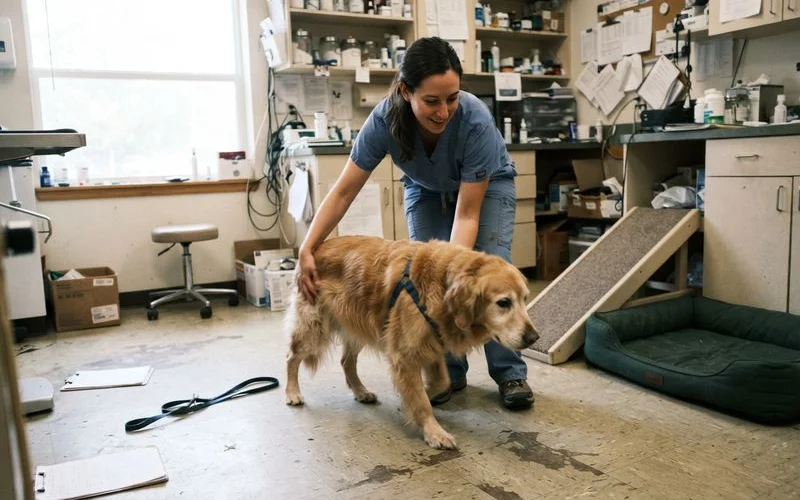
Vet visits are only part of the picture. Simple changes at home make a real difference alongside professional care: a ramp or steps to a favorite couch or bed if jumping has become harder, non-slip mats on slick floors for a dog with weaker joints, and a diet adjustment if your vet recommends one for weight or kidney support. None of these replace medical care, but they reduce daily strain in ways that compound over time.
Keeping a simple log of changes, appetite, mobility, water intake, between visits also helps. Memory is unreliable over six months, and a vet working from your specific notes rather than a general impression can spot a trend faster.
When it’s more than typical aging
Occasionally what looks like ordinary slowing down turns out to be a specific, treatable condition, arthritis pain that responds well to medication, or a thyroid imbalance that’s straightforward to manage once diagnosed. This is exactly why the twice-yearly exam matters: it catches the treatable cases before you’ve settled into assuming nothing can be done.
Making visits easier on an anxious older pet
Senior pets, especially those with joint pain or reduced hearing and vision, can find vet visits more stressful than they used to. Gentle handling matters more here, not less. Mention any new sensitivities, sore joints, hearing loss, cloudy vision, when you book, so staff can adjust their approach rather than handling your pet the same way they would a younger, more resilient animal.
Building a relationship with one general veterinary practice that knows your pet’s full history pays off most in the senior years, when subtle changes matter and continuity of care makes those changes easier to catch.
For more on how we evaluate practices for thoroughness and communication, see our methodology, or browse the full Denver directory to compare options.
FAQ
- At what age is a pet considered a senior?
- It varies by size and species. Small dogs and cats are often considered senior around ten to twelve years, while large and giant breed dogs reach that stage earlier, sometimes by six to eight years.
- Why does my vet want to see my older pet twice a year instead of once?
- Age-related conditions tend to progress faster than in younger pets, so twice-yearly exams catch changes earlier, when they're often easier and cheaper to manage.
- Is slowing down just normal aging, or something to mention?
- Mention it. Reduced activity can be normal aging, but it can also signal joint pain, an underlying illness, or a condition that's easier to treat if caught early.
- Do senior pets need different vaccines than younger ones?
- Not usually different vaccines, but your vet may adjust frequency or specific recommendations based on your pet's health status and any chronic conditions.