What actually happens when you arrive at an emergency vet
By Maya Krishnan · Updated 2026-06-15
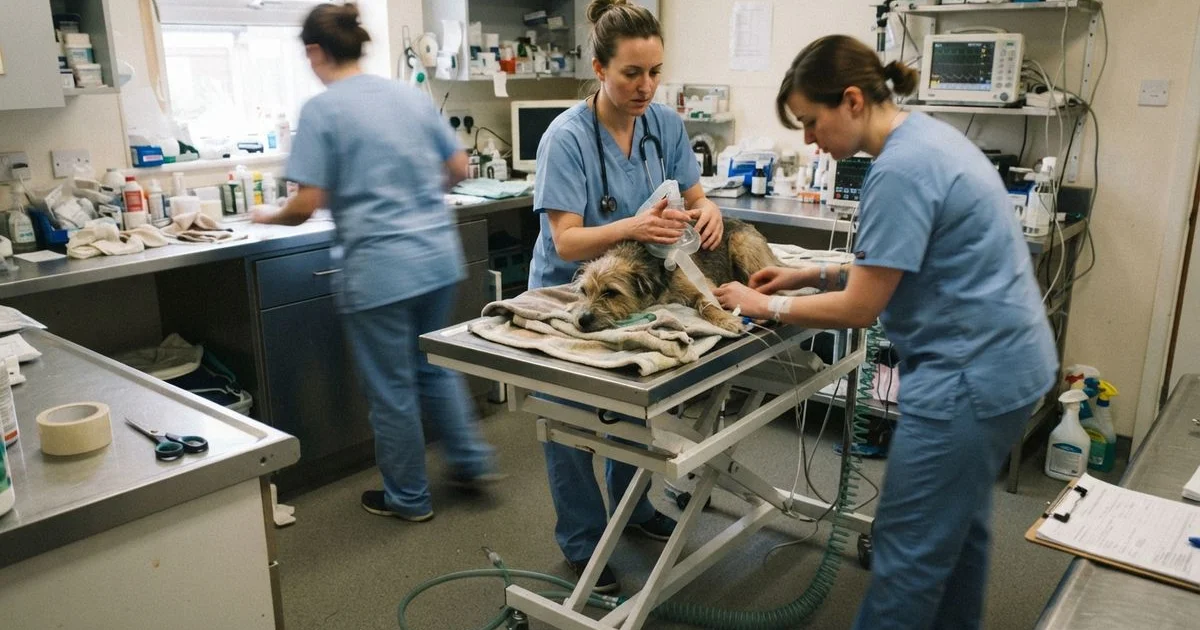
Walking into an emergency vet for the first time is disorienting, mostly because nothing about it works like a normal appointment. Knowing the shape of the process ahead of time takes some of the panic out of an already stressful night.
Check-in and triage
The front desk will ask what’s wrong, how long it’s been going on, and a few quick questions about your pet’s breathing, behavior, and any known exposure to toxins or trauma. A technician typically comes out within a few minutes to do a fast visual check, sometimes checking gum color or breathing rate right there in the lobby. This determines how urgently your pet needs to go back, not how quickly you’ll be done overall.
Pets are seen in order of how sick they are, not who arrived first. A pet with an unstable heart rate or difficulty breathing moves ahead of a pet with a limp, even if the limping pet has been waiting longer. This can feel unfair in the moment, but it’s the standard every reputable emergency practice follows, and it’s the same system that would prioritize your pet if the situation were reversed.
The exam and the conversation about cost
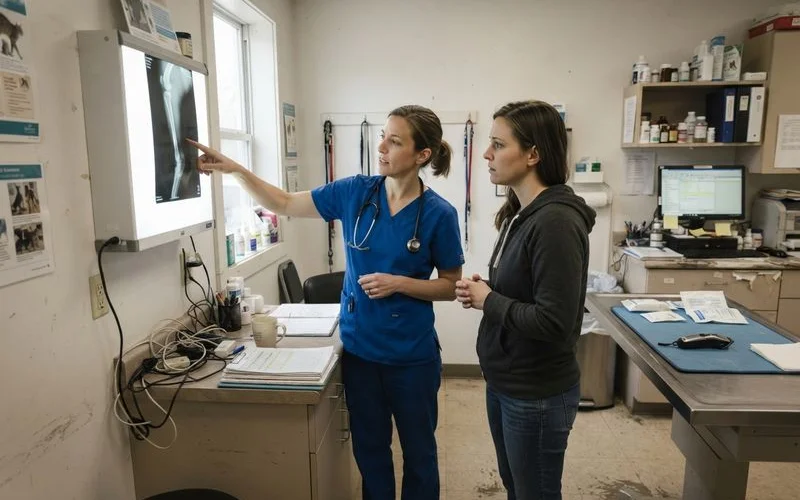
Once you’re back, a vet examines your pet and usually recommends a set of diagnostics, bloodwork, x-rays, or both, depending on the symptoms. Before anything beyond the basic exam happens, expect a written estimate. This is standard practice, not a stalling tactic, and it’s a reasonable moment to ask questions if the plan doesn’t make sense to you.
Cost varies enormously by severity and time of visit. A minor issue seen during daytime urgent care hours might run in the range of one hundred to one hundred seventy dollars. A severe case requiring surgery or overnight monitoring, especially overnight or on a holiday, can run well over a thousand dollars. Ask for the estimate in tiers if cost is a concern: what’s essential now versus what could reasonably wait or be handled at a lower-cost follow-up.
| Situation | Typical range |
|---|---|
| Minor issue, daytime hours | Roughly $100-$170 |
| Moderate issue needing x-rays or fluids, after hours | Roughly $300-$510 |
| Severe case, overnight, surgery or hospitalization | Roughly $1,030-$1,730 |
Waiting, and why it’s often the hardest part
Once treatment is underway, there’s often a period of waiting while diagnostics process or your pet is monitored. Staff should give you a rough sense of timing, though emergency cases by nature don’t run on a fixed schedule. It’s reasonable to ask for an update if you haven’t heard anything in the window you were given.
Bringing along what actually helps
A few small things make the visit smoother: a leash or a secure carrier, a list of any medications and doses your pet currently takes, and the name of your regular vet if you have one so records can be requested later. If you suspect a specific cause, something your pet ate, a fall, contact with another animal, mention it right away. That detail often shortens the diagnostic process considerably.
If you need to leave and come back
Sometimes a pet needs to stay for monitoring longer than you can wait in person, an overnight stay after surgery, for example. Ask directly about visiting hours and how often you’ll get updates, since policies vary by clinic. Most will call with meaningful updates rather than leaving you to guess, but it’s reasonable to ask upfront so you know what to expect.
Discharge or admission
Most emergency visits end one of two ways: you go home with a treatment plan and instructions, or your pet needs to stay for continued monitoring or treatment. If discharged, you’ll get written aftercare instructions and, often, a recommendation to follow up with your regular vet within a few days. Keep that paperwork. Your regular vet will want the full picture of what was done, especially if further care is needed.
For a broader sense of the signs that mean you should head in at all, see our companion guide on recognizing a pet emergency. To find emergency and urgent care providers near you, browse the directory, and check our methodology for how we evaluate responsiveness and care quality. The full directory covers every category if your pet also needs a follow-up specialist.
FAQ
- Why did a less sick-looking pet get seen before mine?
- Emergency clinics see patients by severity, not arrival order. A pet that looks calm but has an unstable vital sign can be sicker than one visibly limping or whining.
- Can I stay with my pet during the exam?
- It depends on the case and the clinic's setup. For stable pets, many clinics allow you in the room. For active resuscitation or unstable patients, staff usually need the space to work quickly.
- Why do they ask me to leave a deposit before treatment?
- Emergency treatment can escalate quickly in cost, so many clinics ask for an estimate approval and deposit upfront to avoid a large surprise bill and to confirm you want to proceed with recommended care.
- What if I can't afford the recommended treatment?
- Say so directly. Most emergency vets can offer a tiered plan, starting with the most critical interventions, and will discuss options rather than assuming you'll decline all care.