Which vaccines does your pet actually need in Denver
By Maya Krishnan · Updated 2026-06-13
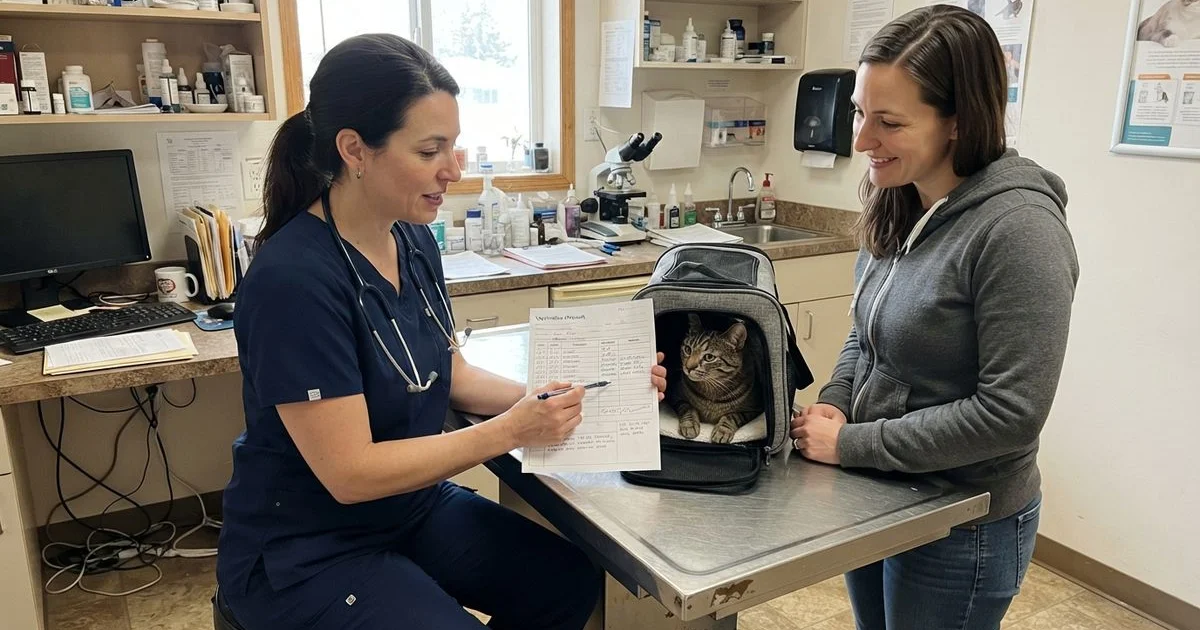
Vaccine schedules look intimidating on paper, mostly because clinics list every option your pet could theoretically need rather than the ones your specific pet actually needs. The real question isn’t “what’s available,” it’s “what does my pet’s life actually expose them to.”
Core vaccines: not really optional
A small set of vaccines are considered essential for nearly every pet, regardless of lifestyle. For dogs, that generally means distemper, parvovirus, and adenovirus, usually given as a combination shot, plus rabies. For cats, it’s typically feline viral rhinotracheitis, calicivirus, and panleukopenia as a combination, again plus rabies. Rabies carries extra weight because Colorado law requires it for dogs and cats, independent of whether your pet ever leaves the house.
Non-core vaccines: match them to your pet’s actual life
This is where a real conversation with your vet, rather than a standard menu, pays off. A few common examples:
- Bordetella matters if your dog boards, attends daycare, or spends real time at dog parks, since many Denver facilities require proof before admission.
- Leptospirosis is worth discussing if your dog hikes, drinks from streams, or spends time around wildlife, which covers a fair number of Front Range dogs.
- Feline leukemia is more relevant for cats that go outdoors or live with an unknown-status cat.
None of these are automatic. A strictly indoor cat with no other pets has a very different risk profile than an outdoor cat in a multi-cat household, and the vaccine plan should reflect that difference.
What a vaccine visit typically costs
| Scenario | Typical range |
|---|---|
| Adult dog, 3 core vaccines, full-service vet | Roughly $68-$91 |
| Adult cat, 2 vaccines, low-cost clinic | Roughly $24-$32 |
| Puppy or kitten series (4 vaccines), full-service vet | Roughly $174-$232 |
Puppies and kittens cost more overall because they need a series of shots spaced weeks apart, not a single visit, to build proper immunity. A low-cost or vaccine-specific clinic can meaningfully reduce this total compared to a full-service hospital, especially across a full puppy or kitten series.
Multi-pet and multi-species households
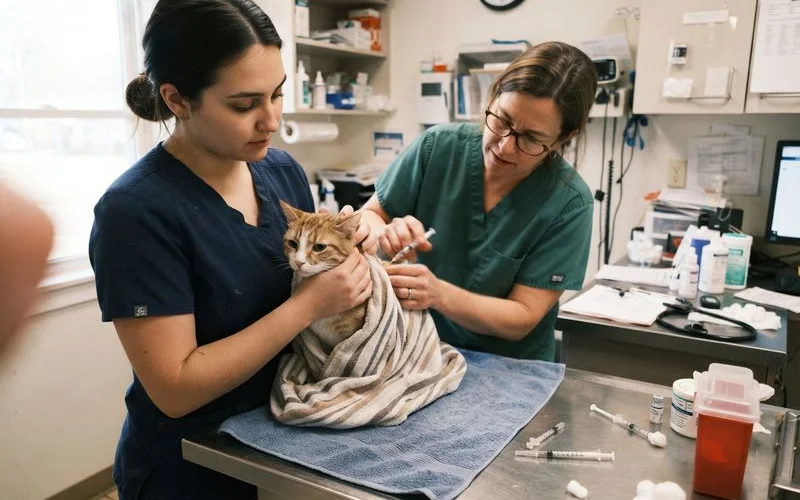
If you have several pets, or pets of different species, resist the urge to apply one vaccine plan across all of them. A dog that hikes and a housebound senior cat in the same home have almost nothing in common in terms of lifestyle risk, and treating them identically usually means over-vaccinating one and possibly under-protecting the other. Ask your vet to walk through each pet’s plan individually, even in the same visit.
Boarding, daycare, and grooming requirements
Even a dog whose lifestyle wouldn’t otherwise call for bordetella often needs it anyway, because most Denver boarding facilities, daycares, and some grooming shops require proof before admission. If you plan to board your pet or use daycare even occasionally, it’s worth getting ahead of this requirement rather than discovering it the week before a trip when there’s no time left to complete the vaccine and its waiting period.
The same logic applies to titer testing. Rather than reflexively re-vaccinating for core vaccines on a fixed schedule, a titer test checks your pet’s actual existing antibody levels first. Some owners use this to space out core vaccine boosters, though the test itself has a cost, so it’s worth asking your vet whether it makes sense for your specific pet rather than assuming it saves money in every case.
Building a plan instead of defaulting to everything
The best approach is a short conversation at your pet’s annual visit: what’s the household setup, does your pet board or go to daycare, does it spend time outdoors or around other animals. A vet who tailors the plan to that conversation, rather than reflexively recommending every available vaccine, is doing the job right. If cost is the deciding factor, a low-cost or vaccine clinic can often deliver the same core protection at a lower price than a full hospital visit.
For more on how we evaluate local practices, see our methodology, or compare vaccine and wellness providers across the full Denver directory.
FAQ
- Does my indoor-only cat still need vaccines?
- Yes, at minimum the core vaccines. Rabies is legally required regardless of lifestyle, and indoor cats can still be exposed through an open door, a bat in the house, or a future move.
- Is bordetella really necessary if my dog doesn't go to daycare?
- If your dog never boards, visits daycare, or spends time at dog parks, it's a reasonable one to skip. Many boarding and daycare facilities require it, so it becomes necessary the moment your dog's routine changes.
- Can I space out vaccines instead of doing them all at once?
- Yes, most vets can spread a series across visits if you prefer, though this usually means more appointments and more exam fees over time.
- What's a titer test and does it replace a booster?
- A titer test checks existing antibody levels and can sometimes show a booster isn't needed yet. Ask your vet whether it's a good fit for your pet before assuming it will save money, since the test itself has a cost.